Choosing
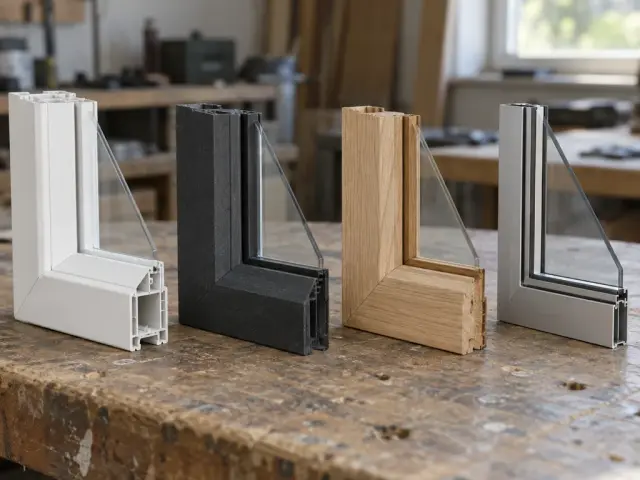
Four frame materials, four weak spots
The material argument is usually made in a showroom, where every option is described by what it is good at. Each also has a situation in which it is the wrong answer.
- Vinyl
- The default, and for good reason: it insulates well, needs no paint, and costs the least. It also expands and contracts more than the others, which shows up as sticking sashes on very large units and in extreme heat. Colour choices are limited because dark colours absorb heat.
- Fiberglass
- Moves almost as little as the glass it holds, so seals last longer and big units stay square. Costs more than vinyl, takes paint, and is the usual answer where a vinyl frame would be at its limit — wide openings, dark colours, hard sun.
- Wood
- Still the best insulator of the four and the only one that suits a historic exterior. It needs maintenance on the weather side, and in a wet climate that maintenance is not optional. Usually clad in aluminium or vinyl outside for that reason.
- Aluminium
- Strong and thin, which is why it turns up in commercial work and in large spans. On its own it conducts heat straight through the frame; only thermally broken units belong in a house, and in a cold zone they still struggle to meet the criteria.
What the material does not decide
The two numbers on the label are a property of the whole unit, glass and frame together. A vinyl window and a fiberglass window can carry the same U-factor, and the certification does not care which frame got it there. Ask for the numbers rather than the material, and let the material argument be about maintenance, span and appearance — which is what it is actually about.