Choosing
Insert or full frame
The single largest fork in a window quote, and the one least often explained before the number appears.
Insert
A new unit fitted inside the existing frame. The trim inside and the cladding outside stay where they are, the work is quicker, and the disruption is measured in hours per opening. The cost is the lower of the two.
What you give up is glass area: the new frame sits inside the old one, so every opening loses an inch or so of daylight. On a small window that is noticeable.
An insert also assumes the existing frame is sound. If it is not, the new window is being fastened to rotten wood, and the failure arrives two winters later.
Full frame
Everything comes out down to the rough opening: frame, sill, trim. The new unit is flashed and insulated against bare framing, and the glass area is whatever the opening allows.
It costs more, takes longer, and involves interior finishing work. It is also the only honest option when the sill has rot, when the opening is out of square, or when the wall has to be brought up to a current code requirement.
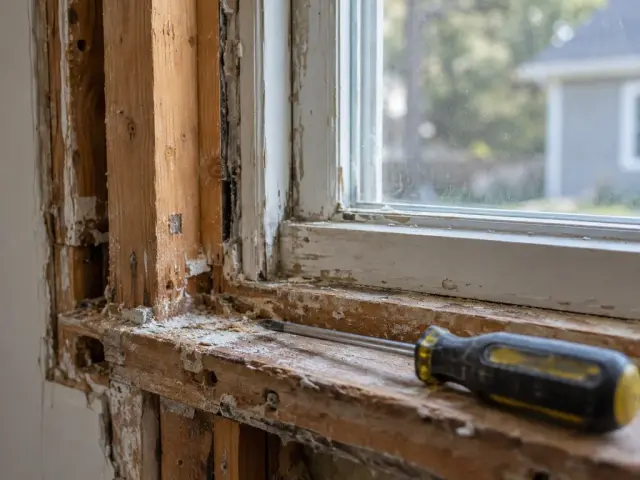
How the choice actually gets made
Not by preference. By what is behind the trim, which is found with a screwdriver at the measurement rather than guessed at over the phone. Aluminium cladding on the outside is worth mentioning when you call — it hides water damage particularly well.
What happens at the measurement
- 01
Measuring, every opening
Inside and out. A house settles, and by the end no two openings are the same width — which is why a quote given without measuring is a guess.
- 02
What is behind the trim
Rot at the sill, a dropped header, aluminium wrap over wet wood. Found now it is a line on the quote; found on installation day it is a change order.
- 03
The numbers, written down
U-factor and solar heat gain for your climate zone, per unit, on the paperwork. Both are certified by the NFRC and printed on the glass, so both can be checked afterwards.
- 04
Itemised by opening
With the product line named. A single total for "windows" cannot be compared with a second quote, because the two may not describe the same work.
- 05
What happens if the price changes
Ask before signing, not after: what triggers a change order, and whether the quoted price holds if the measurement finds rot. This is the most common reason a number moves.
- 06
Who pulls the permit
And whether its cost is inside the quote. A permit taken out in the homeowner’s name puts the compliance on the homeowner.