Coastal
Required, not recommended
Near the coast, protecting openings against wind-borne debris stops being an upgrade and becomes a condition of the permit.
Two tiers, and they are not the same
The High-Velocity Hurricane Zone covers Miami-Dade and Broward counties, and it is the strictest window standard in the country. Design wind speeds there run to 175 and 170 miles per hour. Products need a Miami-Dade Notice of Acceptance — a specific approval, not the statewide one — and they cost appreciably more than the same window three counties north.
The wind-borne debris region covers much of the rest of the coastline. Every exterior opening in it has to be protected, either by impact-rated glazing or by shutters. Shutters are cheaper to buy and have to be put up before each storm; impact glass costs more once and then does nothing that requires you.
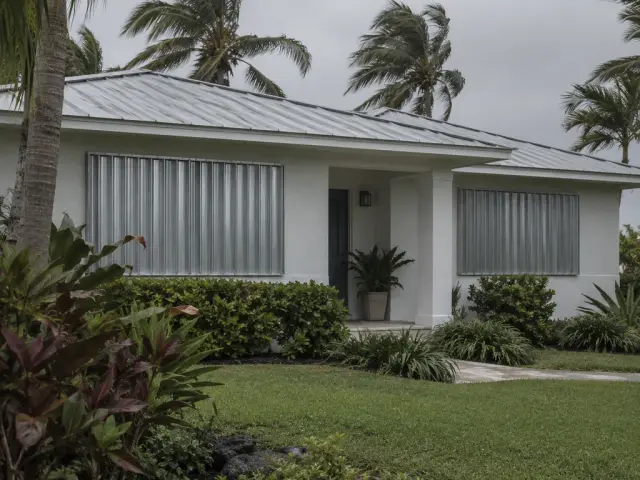
Whether your address is inside
That is a determination, and the building department makes it. It turns on the design wind speed at the site and on the distance to tidal water, and the boundary does not follow a county line — two houses in the same town can fall on different sides of it.
We will not guess it for you. What is worth doing before you shop is ringing the county or city building department with the address and asking two questions: is this address in the wind-borne debris region, and which edition of the code applies to a permit pulled now.
Why the date matters this year
Florida's ninth edition takes effect on 31 December 2026. Permits pulled before then are assessed under the current edition. If a project is close to that line, the permit date rather than the installation date is what decides which rules apply to it.
What to ask for on the quote
The approval number for the product, written down. In the high-velocity zone that is a Miami-Dade Notice of Acceptance; elsewhere in Florida it is a Florida Product Approval number. Both are public and checkable, and a quote without one is not a quote for a legal installation.
- License
- Issued by the state where the work happens and held by the contractor, not by this site. Ask which name it is held under — a trading name and the licensed entity are often not the same.
- Lead certification
- Required by federal rule for paid work on any home built before 1978. It has a number, and the firm should give it without hesitating.
- The call
- Describing the job commits you to nothing. Nothing is measured or ordered until you say so.
- Coverage
- By town, not by region. Pick a state below and work down to where you are.