Building
A new opening needs a different window
Additions, garage conversions and new walls do not take replacement units. The difference is a flange around the frame, and it decides the order of the whole job.
The difference in one sentence
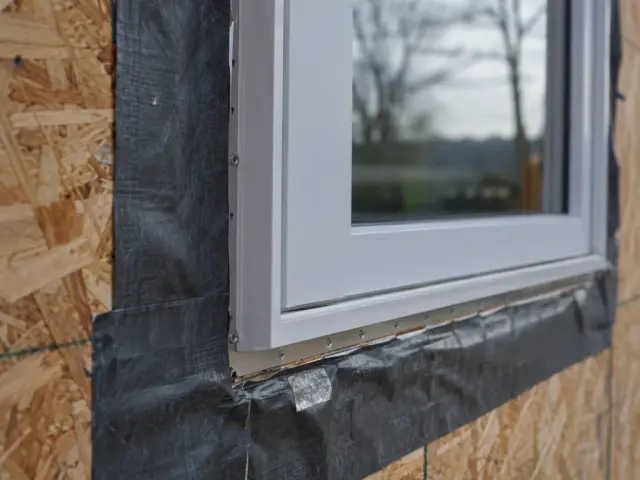
A new-construction window has a nailing fin — a flange that is fastened to the sheathing and lapped into the weather barrier before the cladding goes on. A replacement window has no fin, because it goes into a wall that is already finished.
Why it decides the sequence
Fin windows have to be in before siding and flashing. That puts the window order early in the schedule of an addition, and a delay in manufacture holds up everything behind it. On a replacement, by contrast, nothing else waits.
It also changes who inspects it. A new opening is structural work: the header, the framing and the flashing are all part of the permit, and the window is checked as part of the assembly rather than on its own.
Where people get caught
A garage conversion is the usual one. The wall is existing, so it sounds like replacement, but the openings are new and the wall is being opened up anyway — which means fin windows and a permit.
The other is enlarging an opening for light. Widening a window is not a window job at all until the header above it has been sized, and that is the part that decides the cost.