Taylor, PA
Window Replacement in Taylor
ENERGY STAR puts Taylor in the Northern zone, and that changes what to look for on the label. Look for a U-factor of 0.22 or lower — that is the heat leaving the house. But the solar heat gain number works the opposite way here: 0.17 or higher is what qualifies, because winter sun through the glass is heat you are not paying for.
(855) 235-1641Licensed Pennsylvania installers. No obligation for the call.
heat leaving — the U-factorsun through the glass — solar heat gain
The housing in Taylor mostly predates double glazing — the median house dates to the 1960s. That usually means single panes in wood sashes, with the weight-and-pulley system still in the frame. Those windows leak at the sash, not through the glass, which is why weatherstripping helps and never quite fixes it.
Because most houses in Taylor predate 1978, window work there falls under a federal rule. Anyone paid to disturb painted surfaces in a pre-1978 home has to be a Lead-Safe certified firm — and pulling a window out disturbs them by definition. Ask for the certification number before anyone starts: the penalty for working without it runs to tens of thousands of dollars, and it lands on the contractor, not on you.
More on what the two label numbers mean, on what the work costs, and on houses built before 1978.
Which windows you have
Worth knowing which you have before you call — it is the first thing anyone will ask, and the answer changes the price.
- License
- Held by the contractor and issued in Pennsylvania. Ask which name it is held under — a trading name and the licensed entity are often not the same.
- Lead certification
- Required by federal rule for paid work on any home built before 1978. It has a number, and the firm should give it without hesitating.
- The call
- Describing the job commits you to nothing. Nothing is measured or ordered until you say so.
- Coverage
- By town, not by region. Taylor and the towns around it.
What they will ask you
- 01How many windows, and which rooms they are in. Two is where a replacement job usually starts being worth scheduling.
- 02What type they are — double-hung, casement, slider — and roughly what size. The list above is enough to answer with.
- 03What is wrong: draughts, condensation between the panes, sashes that will not stay up, or simply age.
- 04Roughly when the house was built. It decides what is in the wall and whether the federal lead rule applies.
- 05Whether you own the home. A landlord or an HOA in the picture changes who signs and when.
What happens at the measurement
- 01
Measuring, every opening
Inside and out. A house settles, and by the end no two openings are the same width — which is why a quote given without measuring is a guess.
- 02
What is behind the trim
Rot at the sill, a dropped header, aluminium wrap over wet wood. Found now it is a line on the quote; found on installation day it is a change order.
- 03
The numbers, written down
U-factor and solar heat gain for your climate zone, per unit, on the paperwork. Both are certified by the NFRC and printed on the glass, so both can be checked afterwards.
- 04
Itemised by opening
With the product line named. A single total for "windows" cannot be compared with a second quote, because the two may not describe the same work.
- 05
What happens if the price changes
Ask before signing, not after: what triggers a change order, and whether the quoted price holds if the measurement finds rot. This is the most common reason a number moves.
- 06
Who pulls the permit
And whether its cost is inside the quote. A permit taken out in the homeowner’s name puts the compliance on the homeowner.
The day itself
One opening takes a couple of hours. A house takes days rather than weeks, and the order rarely changes.
-
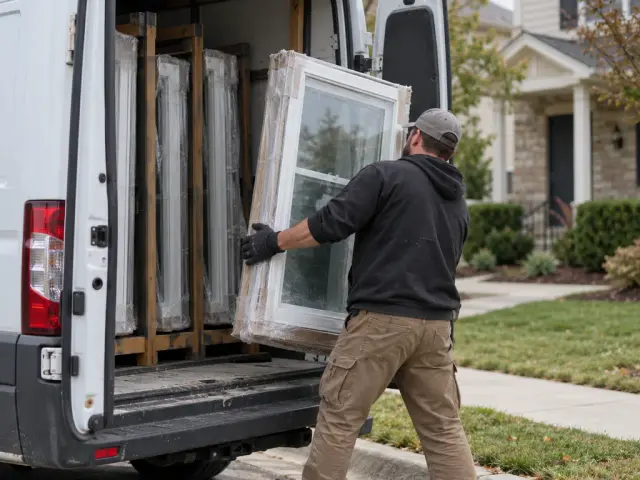 01Units arrive built to your measurements.
 -
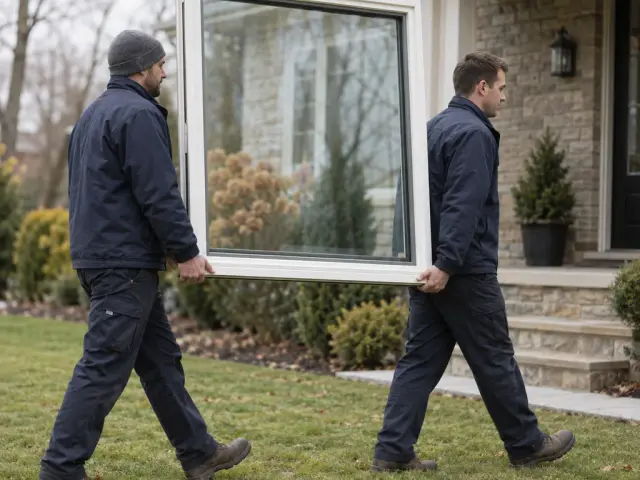 02Carried in, one opening at a time.
 -
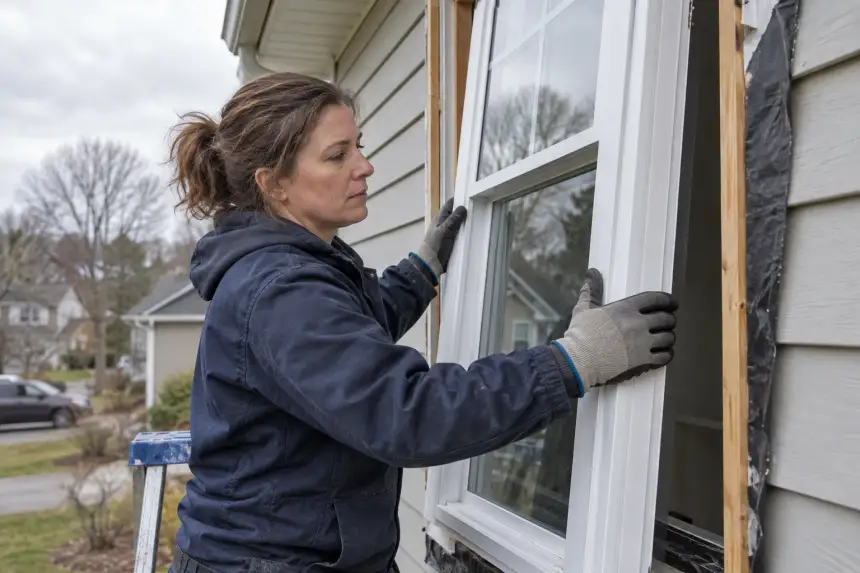
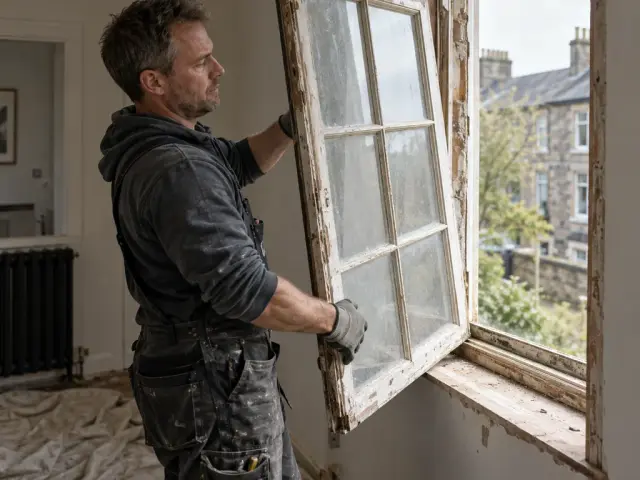 03The old sash comes out. Dust sheets first.
 -
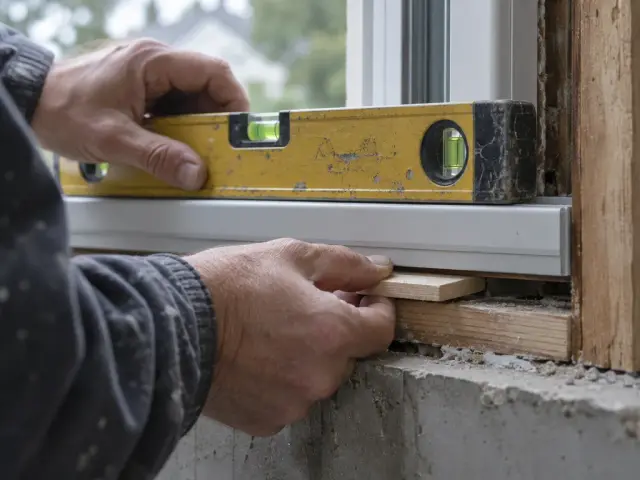 04Shimmed and levelled — a house settles, openings do not stay square.
 -
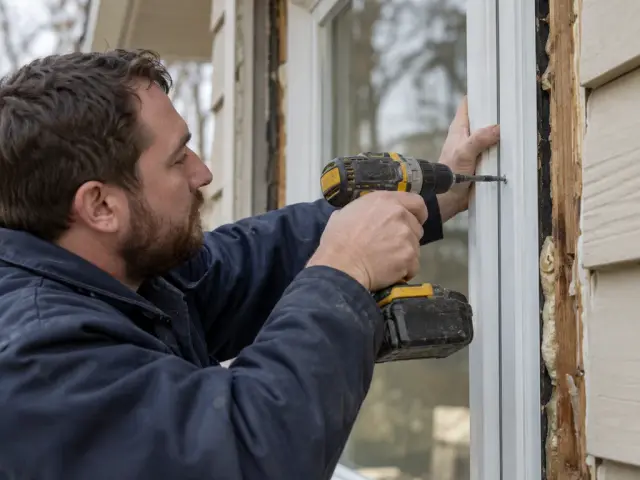 05Set, fastened, sealed against the weather.
 -
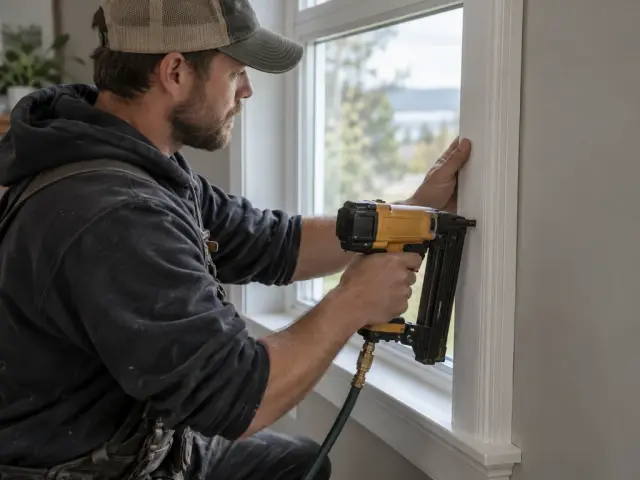 06Trim back on, and the room is a room again.
Describing the job costs nothing
Nothing is measured or ordered until you say so. What is useful on a first call is the count, the type and what is wrong with them — the rest is settled at the opening itself, with a tape.